Click to download now, finish the installation quickly, and directly unlock the all-round experience
Screenshots
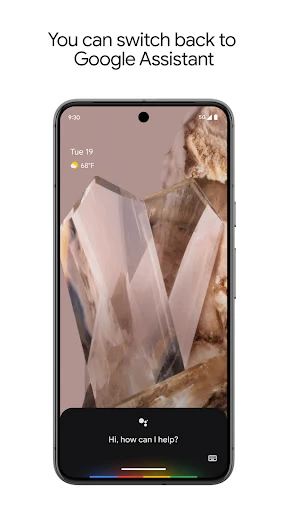
Click to download now, finish the installation quickly, and directly unlock the all-round experience
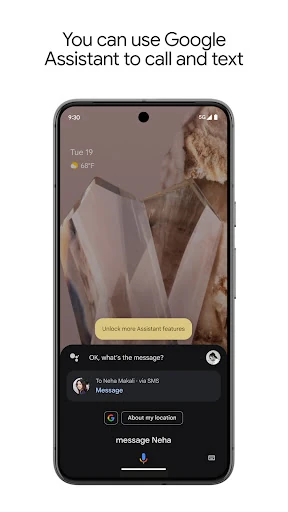
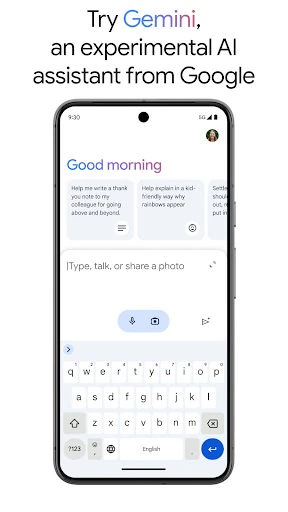
Google Assistant remains the definitive benchmark in the mobile productivity landscape, serving as a sophisticated bridge between the user and their digital ecosystem. As an omnipresent layer within the Android experience, it transcends simple voice commands to offer a proactive, context-aware utility. By integrating Google's massive knowledge graph with local device control, it transforms the smartphone from a passive tool into an active personal coordinator. The recent inclusion of Gemini signals a pivotal shift toward generative AI, positioning the app at the forefront of the next evolution in human-computer interaction.
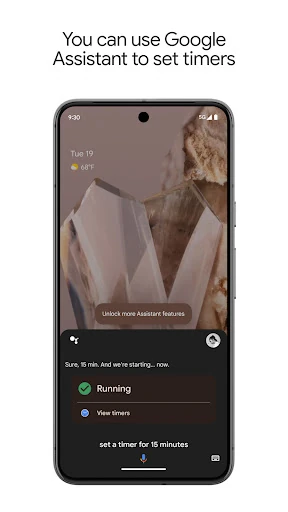
The user experience of Google Assistant is built on the principle of "invisible design," where the interface only surfaces when necessary. The UI is minimalist, utilizing clean Material Design elements that do not distract from the primary task. Transitioning from voice input to visual output is fluid, with cards and snippets providing just enough information to be helpful without being overwhelming. While the introduction of Gemini introduces a slightly more text-heavy interface, the overall UX remains intuitive, prioritizing speed and accuracy in response to user intent.
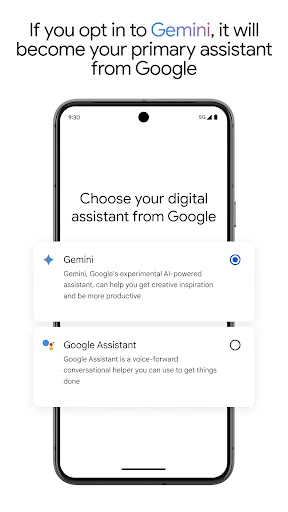
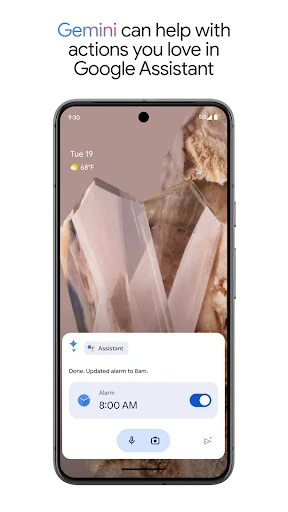
The primary area for improvement lies in achieving feature parity between the classic Google Assistant and the new Gemini interface. Users currently face a "split personality" experience where choosing the more advanced AI means losing certain reliable automation features. Additionally, expanding the "on-device" processing capabilities would improve privacy and allow for faster execution of basic tasks like setting alarms or toggling Bluetooth without requiring an active internet connection.
Google Assistant is an essential tool for busy professionals, smart home enthusiasts, and users with accessibility needs who benefit from a voice-first interface. It is the most robust productivity companion available on Android today. While the shift toward Gemini introduces some temporary inconsistencies, the app remains a must-have for anyone looking to optimize their daily routine through automation and advanced AI assistance.